Autumn Lecture Series 2025:
Digital Humanities and the Ancient Middle East and Asia
Convened by Dr Katie Shields (KCL). Mondays 6.15pm, location varies. For online participation please sign up via the eventbrite links for each event.
6 October – Seraina Nett (Copenhagen), ‘Feeding the Gods: Digital Approaches to the Administration of Regular Offerings in the Ur III Period’ LOCATION: LG 11, UCL Bentham House
For online participation register here: https://www.eventbrite.com/e/lcane-autumn-2025-seraina-nett-tickets-1708408398509?aff=oddtdtcreator
The thousands of administrative records from the Third Dynasty of Ur (c. 2112–2004 BCE) give us a remarkably detailed view of how temples, officials, and institutions worked together to keep the state running. Among them, the documents that record regular offerings to the gods (sa₂-du₁₁, “delivery”) are especially interesting: they show how food, animals, and goods moved through a vast redistributive system, linking local temples to central agencies such as the livestock redistribution centre at Puzriš-Dagan.
In this talk, I explore what we can learn from this material by combining large text corpora with digital tools, especially Social Network Analysis. This approach makes it possible to trace the connections between individuals and institutions involved in the offerings, shedding light on both the practical logistics of feeding the gods and the social ties that underpinned the system.
By looking at these networks, we can begin to see not only how the Ur III administration organized religious life but also how people themselves—officials, families, and communities—were embedded in the structures that sustained the state and its deities.
20 October – Hana Navratilova, ‘Scribes in Cyberspace’ LOCATION: G6 LT in UCL Institute of Archaeology Gordon Square (31-34) & (14) Taviton St
For online participation register here: https://www.eventbrite.com/e/lcane-autumn-2025-hana-navratilova-tickets-1711962890089?aff=oddtdtcreator
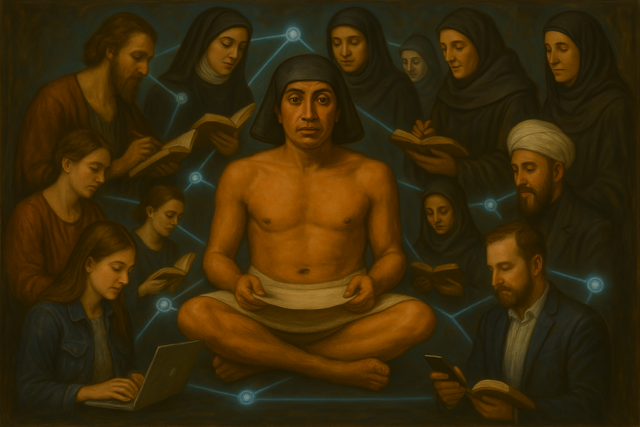
Building on a rich legacy of the study and reception of Egyptian written culture, modern Egyptology has reached out to digital humanities that have emerged as a transformative tool in the study of ancient civilizations, very visibly in the documentation, analysis, and dissemination of ancient sources. Reaching well beyond popular representations in gaming, digital tools now enable scholars to engage deeply with Egypt’s rich textual heritage, encompassing hieroglyphic and hieratic scripts, an expansive lexicon, and they also support access to diverse textual genres—from intellectual treatises to formal inscriptions to administrative records.
One of the most significant advancements is the digitisation of philological resources, exemplified by the Berlin Dictionary of Ancient Egyptian. This project has evolved into a dynamic, annotated corpus of texts, offering universal access to a growing archive of ancient writings. Such digital platforms enhance scholarly collaboration, facilitate comparative research, and democratise access to materials that were once confined to specialist archives. Digital tools also support the visual and palaeographic study of Egyptian scripts. The digitisation of the hieratic script, for instance, allows researchers to trace the hands of ancient scribes with significant precision. Techniques like colour enhancement further aid in recovering faded inscriptions, making previously inaccessible data visible and analyzable.
Despite these advances, challenges remain. Chief among them is the long-term sustainability of digital projects. Ensuring continued access, maintenance, and relevance of digital archives requires stable funding, institutional support, and adaptive technological frameworks. Without these, the risk of digital decay threatens the very accessibility digital humanities aim to promote.
In sum, digital humanities not only enrich our understanding of ancient Egypt but also redefine how research is conducted and shared. As tools and platforms evolve, so too must our strategies for preserving and sustaining these digital legacies. In this talk, we will accompany Egyptian scribes in cyberspace, to explore both opportunities and challenges.
24 November – Vaneshree Vidyarthi, ‘Mapping the Indian Palaeolithic’
Sign up for online participation here: https://www.eventbrite.com/e/lcane-autumn-2025-vaneshree-vidyarthi-tickets-1857561770259?aff=oddtdtcreator
8 December – Gina Criscenzo-Laycock, ‘Connecting Distributed Collections in the Digital Era: Preliminary Work with the John Garstang Archaeological Collection’
Sign up for online participation here: https://www.eventbrite.com/e/lcane-autumn-2025-gina-criscenzo-laycock-tickets-1972776378253?aff=oddtdtcreator
Distributed archaeological collections have the potential to provide a wealth of information, not only of their culture of origin but also of the colonial-era practices of patronage and acquisition that result in their widespread dispersal to museums and collections around the world. Yet their research potential is hindered by their distributed nature, with many researchers unaware of the existence of the larger collection and the additional context they may bring to understanding the past, both in terms of archaeological sites and the practices that help excavate them.
The Reconstructing the Ancient Past project is a collaboration between the University of Liverpool’s Garstang Museum of Archaeology and National Museums Liverpool and is part of the first tranche of Research Infrastructure for Conservation and Heritage Science (RICHeS) projects. Our goal is to make visible and digitally reunited and accessible the distributed archaeological collection of John Garstang, whose early 20th century excavations along the Egyptian and Sudanese Nile have resulted in the distribution of artefacts across over one hundred museums worldwide. This will involve cross-institutional collaboration and knowledge sharing, collection and standardisation of collections data, and the development of a digital portal to enable anyone to engage with the distributed collection for the first time in one place.
15 December – Émilie Pagé-Perron, ‘Linked Open Data in Cuneiform studies: present and future’
Sign up for online participation here: https://www.eventbrite.com/e/lcane-autumn-2025-emilie-page-perron-tickets-1972772852708?aff=oddtdtcreator